
In The Blood: Physiology
Run Through Coach Dr Matt Long gives you a taste of what’s to come both at our next track night and our Physiology Workshop:
Our next Run Through Physiology Workshop in Birmingham is fast approaching on 15th February. It gives you a unique insight into an objective, quantitatively measured set of data which can assess what physiologists like our own Dave Sheldon would frame as a metabolic
response to your running speeds. We have three energy systems of course- namely Aerobic (with oxygen); Lactate (where acidic waste products are produced) and Alactic (our stop-start energy system) and by knowing where your body makes the transition between one system and another can help you not only pace yourself
within a single session but also help you and your coach periodize a training plan over your micro, meso and macrocycles throughout the year.
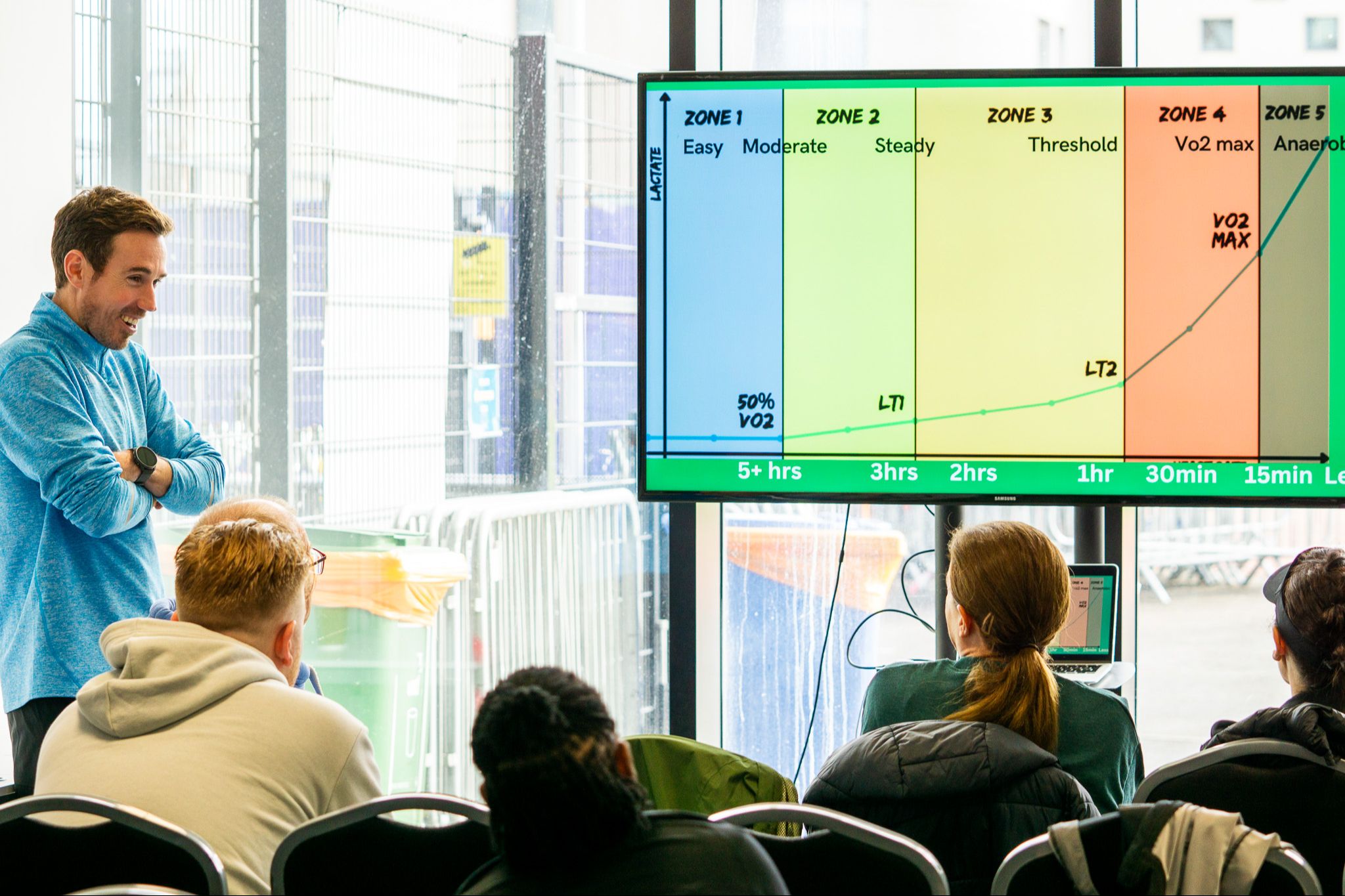
Physiologists will make the distinction between what they refer as in shorthand as LT1 and LT2. The former is the point where lactate in the blood stream starts to rise above a baseline value, whereas the latter is where lactate amasses faster than the ability of our bodies to clear it, hence why acidic waste products appear. Testing metabolic efficiency not only enables us to understand how effectively our body
utilises but it also gives us an understanding of how our bodies of making use of differential energy sources at various intensities such as burning fats and/or carbohydrates. As well as being a predictor of race performance, knowing one’s LT1 and LT2 points helps us monitor the intensity of our training and thus helps us to
avoid injury.
Should you invest in attendance at our Physiology Workshop you will be engaging in the same practice as undertaken by the elites. Perhaps most famously, Tokyo Olympic 1500m champion and Paris Olympic 5000m champion, Jakob Ingebrigtsen, regularly relies on the precision of blood lactate testing during sessions to help him control the intensity of his increasingly popular double-day threshold sessions.
A fair proportion of attendees at our Physiology Workshops are repeat attenders! They come back to us after several months hoping to see their ‘lactate curve’ shift to the right-hand side. This shifting of the lactate curve is an indicator that they can run faster than before with less stress and fatigue.
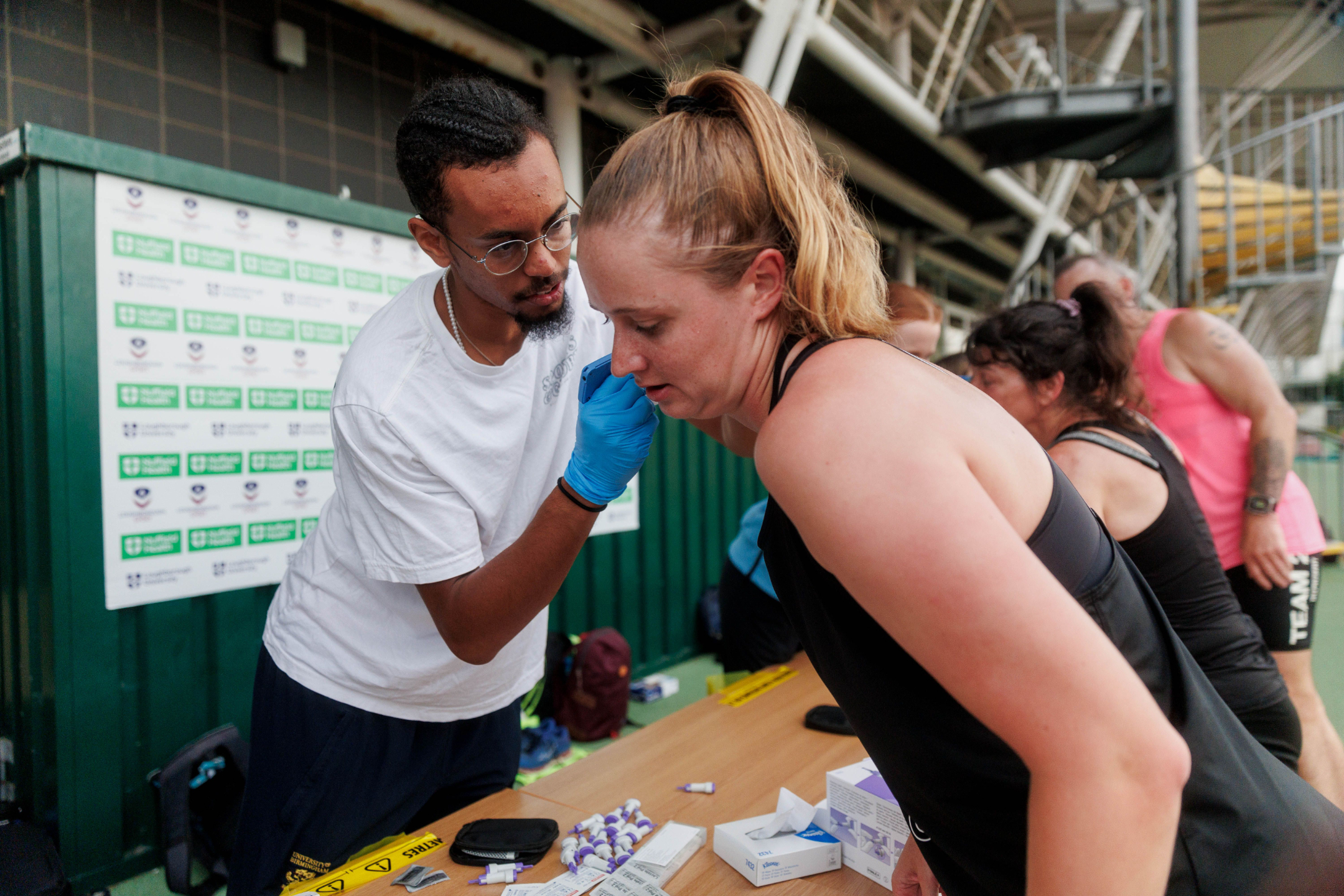
As a ‘taster’ for our Physiology Workshop, our next Friday track night on 30th January has a distinctively physiological focus and you will be encouraged not only to explore other quantitative indicators of training intensity such as heart rate but also to consider triangulating the data which a workshop can give you will more qualitative data such as rate of perceived exertion on a Borg scale or more simply the self-regulatory talk test.
This leaves us with the following questions for self-reflection:
1. Which indicators do I currently use to monitor the intensity of my training?
2. What might be the benefits of qualitatively orientated approaches to
monitoring training intensities such as RPE and the talk test?
3. Why might it help my running to be cognisant what my LT1 and LT points in terms of quantitatively driven data?
Matt Long was recently recognised with a lifetime services award from
England Athletics in appreciation of his quarter of a century as coach and coach educator.