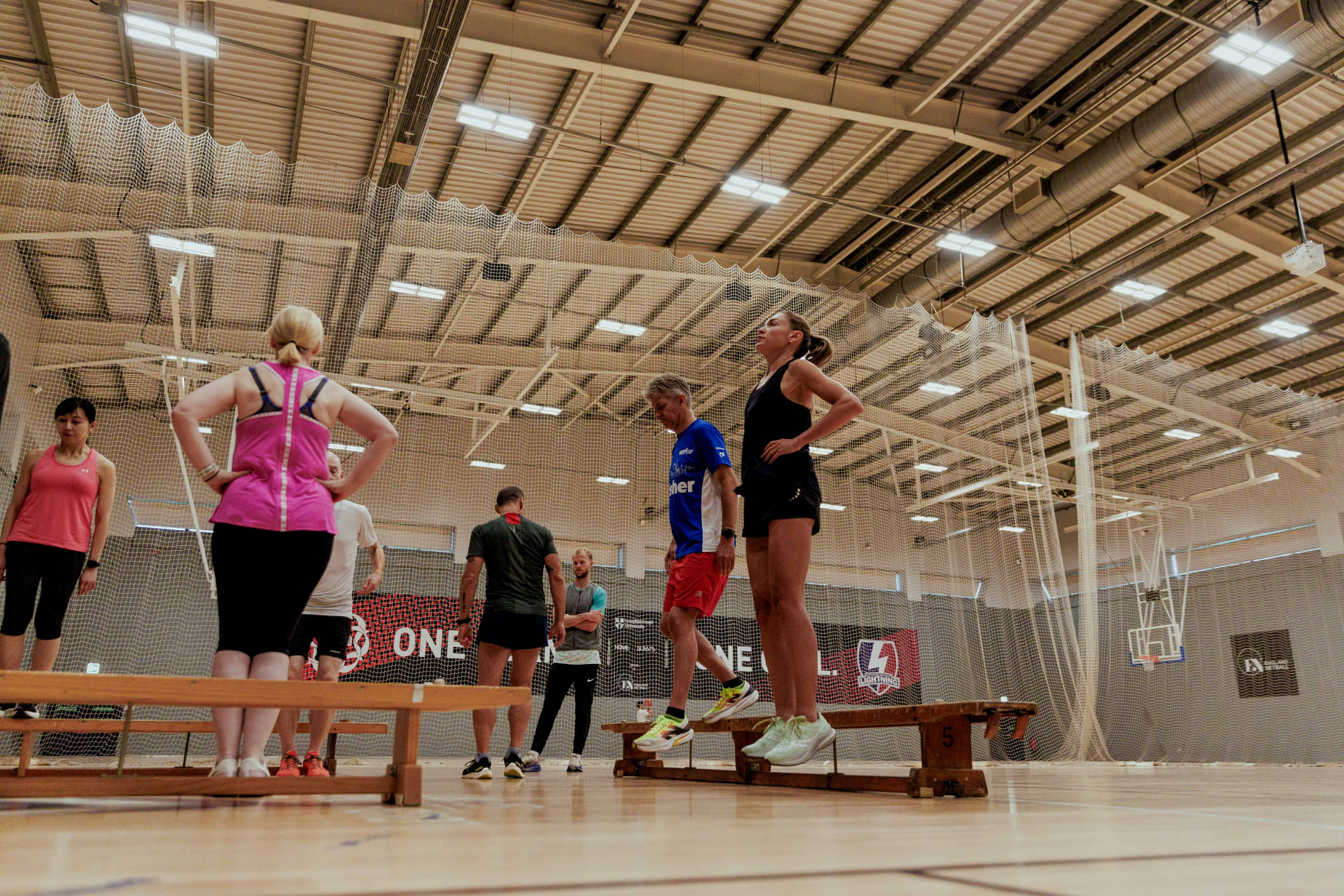
Make Calves A Priority
Most runners don’t think about their Calf’s until they become a problem. But long before there are any signs of injury or discomfort the muscles in that area are quietly working away.
Calf development should be one of the strongest areas we focus on as runners, but too often this takes a back seat. When you run the Gastrocnemius and Soleus two of the primary muscles that make up the calf do more than just help you push off. They are the two largest contributors to forward motion of the body, they absorb force/ load put through them, helping control landing and actively contribute to the efficiency of your stride at a variety of different paces. The insertion at the Achilles allows for plantar flexion at the ankle joint, meaning you can push down against the ground starting the process of that forward movement. This makes your calves fundamental to both the propulsion and shock absorption, especially when at higher speeds or uphill.
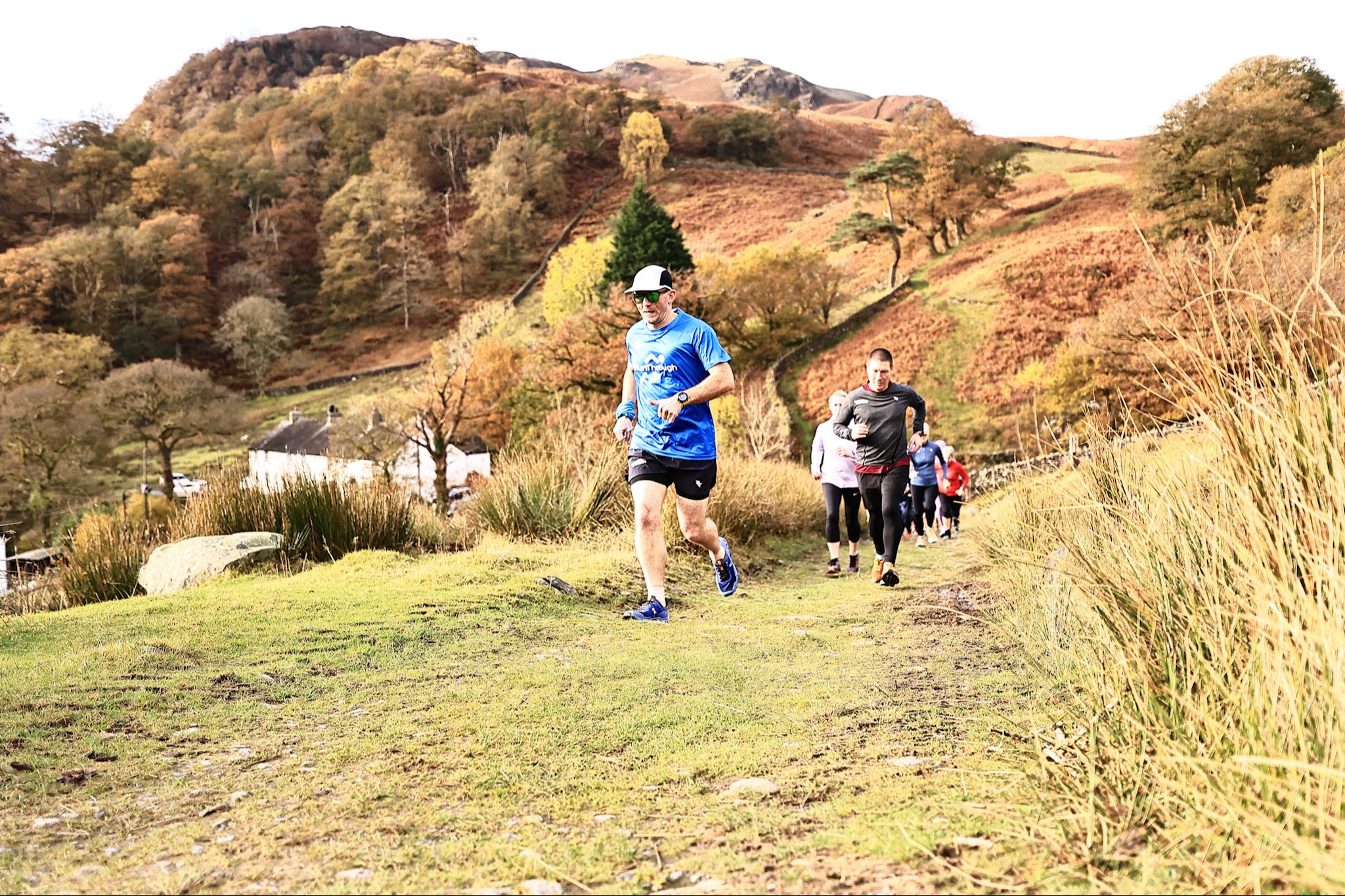
The action of running, especially when running up elevation or at increased speeds place a repetitive load of strain through your calves. Although this develops endurance and movement specific adaptations, this does not train all qualities of that calf that need to be developed for optimal performance. We can develop calf strength in a variety of movement variations with the use of plyometrics, heavy resistance exercises, and notably isometric holds. However, many runners may use the same weight/ load they did years ago. To allow for progressive development of the calves, the load must be increased sensibly over time. Calves respond best when they’re loaded properly — too light, and they won’t develop the strength and power you need for running.
A common misconception is that running hills alone is “nature’s strength training”. While running uphill challenges your muscles and builds running-specific strength, the muscles are still not exposed to the same loads, force and fibre recruitment that conventional strength training offers.
When running uphill, your calves and a variety of other muscles in the lower limb perform repetitive submaximal concentric contractions to propel you forward. Strength specific loading exercises on the other hand allow you to produce higher maximal forces, recruit different muscle fibres, and apply controlled eccentric loading - Adaptations that running alone simply cannot provide.
Stronger calves do more than just help you push off the ground, they improve your overall running economy this being how efficient your form is. Improved calf strength allows you to generate more propulsion with less effort required. Your lower limb stability also improves with, this leads to reduced compensatory load on the knees and hips while running, linking to better movement mechanics (running economy).
The big one for runners is the dreaded words from the physio saying you need to take time off due to injury. Properly loaded calves also help prevent common running related injuries such as Achilles tendinopathy, shin/ bone stress related issues, or any plantar fascia irritation. The calves take the brunt of all load put through your body when running so it is necessary to keep them thoroughly conditioned.
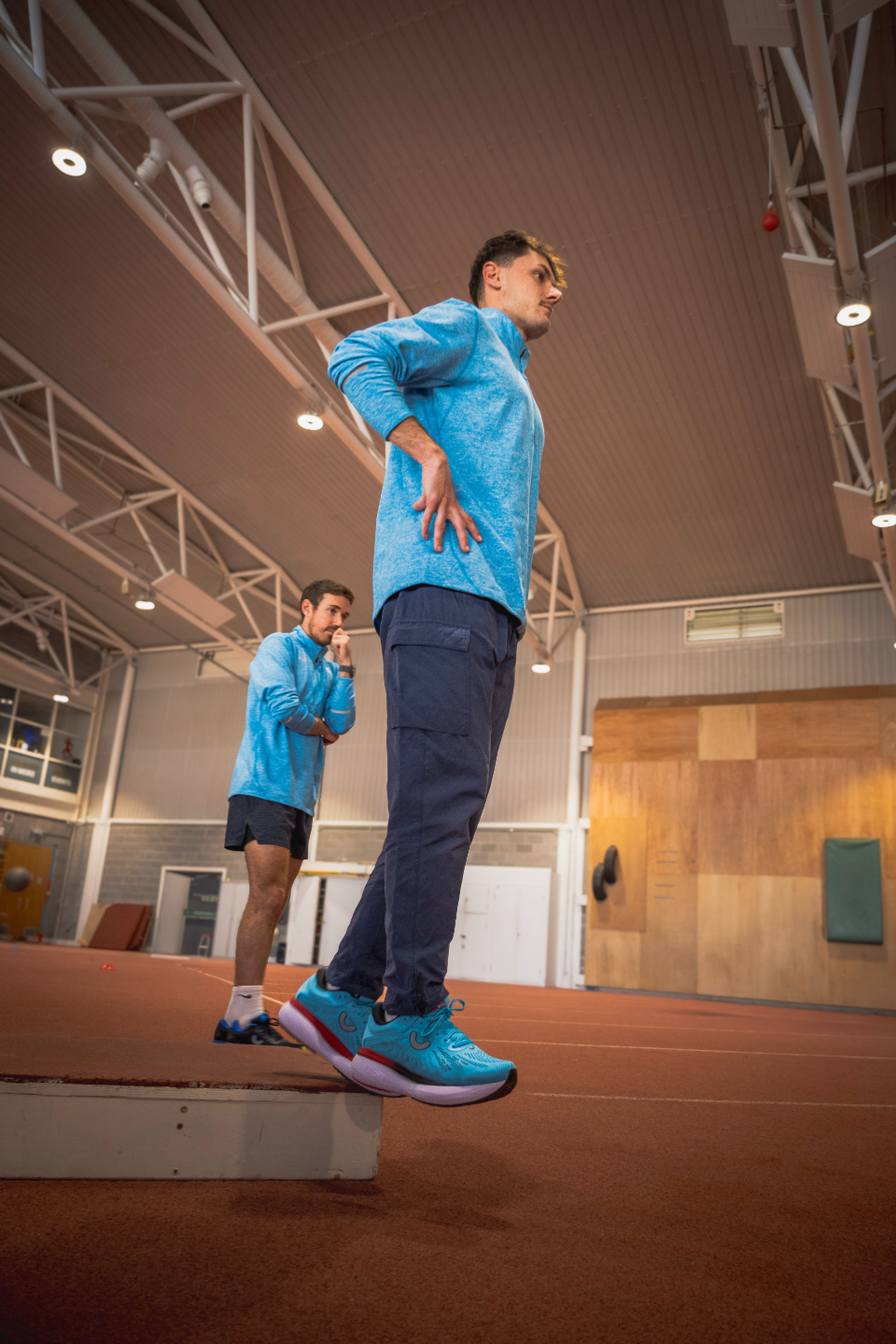
Developing durable and powerful calves requires more than just a few quick calf raises. Effective training includes high-load strength exercises, such as weighted calf raises and loaded jumps, to build force capacity. Eccentric-focused exercises, like slow lowering phases, help improve tendon resilience and shock absorption, while plyometric or reactive movements, such as hopping and bounding, enhance dynamic power and responsiveness.
To see meaningful adaptation, it’s essential to apply progressive overload, gradually increasing the weight over reps or complexity of exercises over time. A well-rounded approach targets both the Gastrocnemius and Soleus, improving both concentric and eccentric force development and translating directly to stronger, more efficient running.
Written by Sam Goodchild who has an Msc In Sports Health & Exercise Science, who focused primarily on Strength & Conditioning over his masters and placement year. Sam completed his Thesis on the Effect of Strength Conditioning Programs on Running Performance. As well as this is he is the head of Athletics at Nottingham Trent University