Standing On One Leg
Coach Matt Long on getting the most from a running technique workshop — the why and the when of drills, not just the what.

Run Through Coach Matt Long wants you to get the best out of our Running Technique Workshops:
So you’ve taken the plunge and signed up for our Running Technique Workshop. Or perhaps you are wishing you did or are still toying with the idea of signing up for a future incarnation.
Either way, read on…. What you will get in abundance at this workshop from Lewis, Kirsty, Sam and Denise are plenty of What To tips about which drills to effect. The day will require you to be what Honey and Mumford (1982) would have framed as an ‘activist’ in your learning
style and will predominantly lean towards what Fleming (1992) framed as a kinaesthetic or feel based mode of doing. All very well and it’s that very practical mode of learning which you signed up and paid for.
The above being said evidence suggests that post any workshop, there is a considerable drop off in terms of commitment to what any athlete has learned and is prepared to habituate. There is the very real danger that you simply attend but never fully commit to embedding some of the workshop drills into key parts of your regime. So by understanding the Why To and When To of running technique drills, we feel you stand a far greater chance not only of retaining the What To drills but you will understand why and where they may appear in your micro-cycle of training and thus commit to rather than begrudgingly comply with doing them.
Why To Do Drills
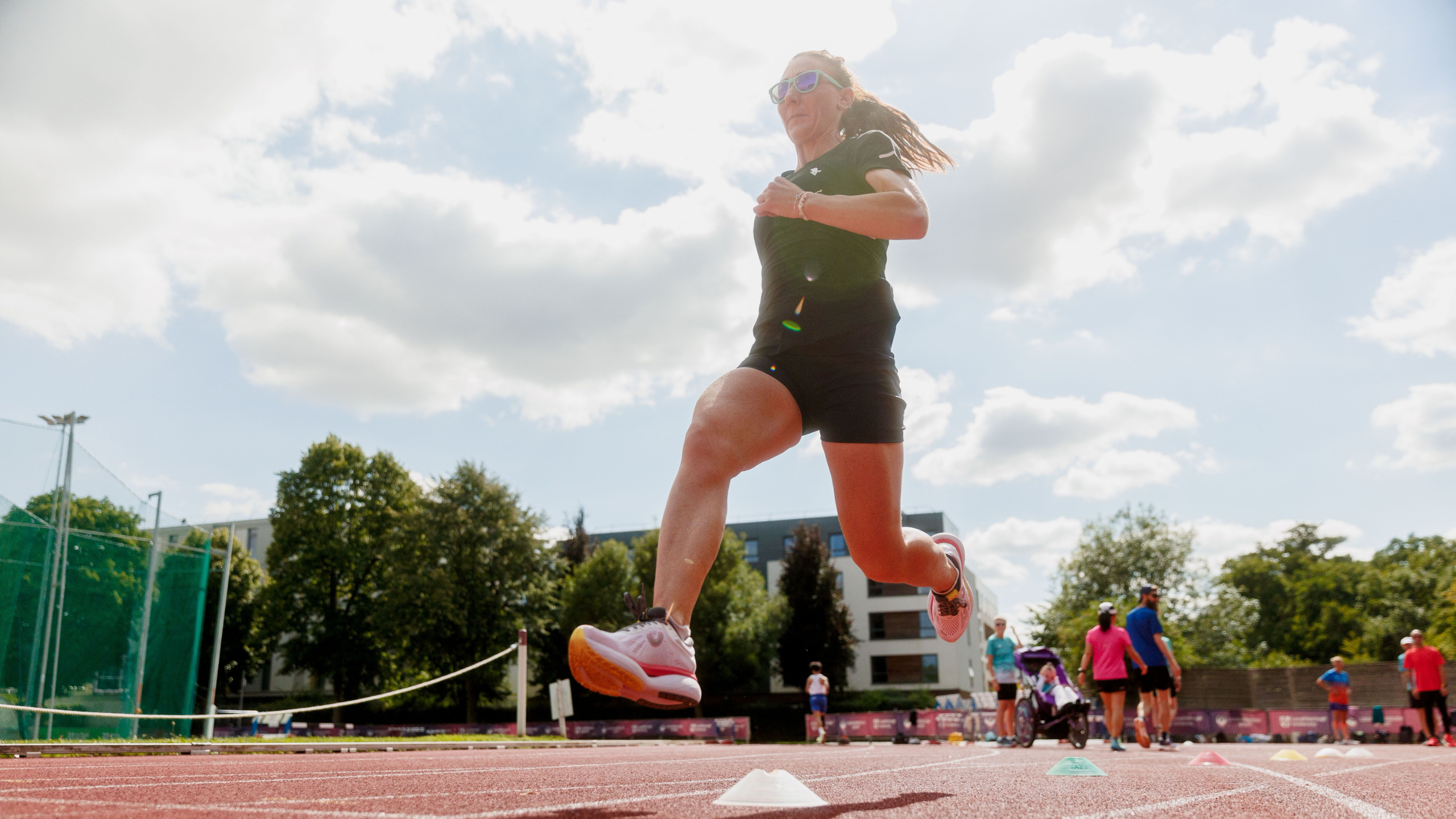
Lots of athletes tend to wait until injury persists to really commit to routinising their drills. It’s of course true that doing drills lessens the chances of injury. This is because to a degree the stress on vulnerable joints and muscle groups is lessened the more we begin to move biomechanically better. Hopping, skipping and jumping with our Run Through Coaching Team will help you with single led load tolerance.
Those shin splints may not be as common or that persistent PF niggle may become a thing of the past.
Now, let’s think more positively about how the habituation of drills can help improve performance. The tendons around ankles and knees can be taught to harness elastic energy which has a recoil effect when your foot hits the road, trails or track. This in turn helps to reduce ground contact time or ‘braking’ on foot strike and increases ‘flight’ time when your feet are off the ground. Minimising ground contact time helps improve cadence or the number of steps we take within a given time and in turn helps to avoid the braking effect caused by overstriding as we train the foot to land under rather than ahead of the centre of mass.
The long term habituation of drills over a period of months will help prevent collapse at the hips and help you to ‘run tall’ in the last couple of agonising miles in that marathon you’ve trained so hard for and by running tall you can finish striding rather than shuffling as your core, glutes and hamstrings continue to propel you forward due to continued application of force against the ground.
When To Do Drills
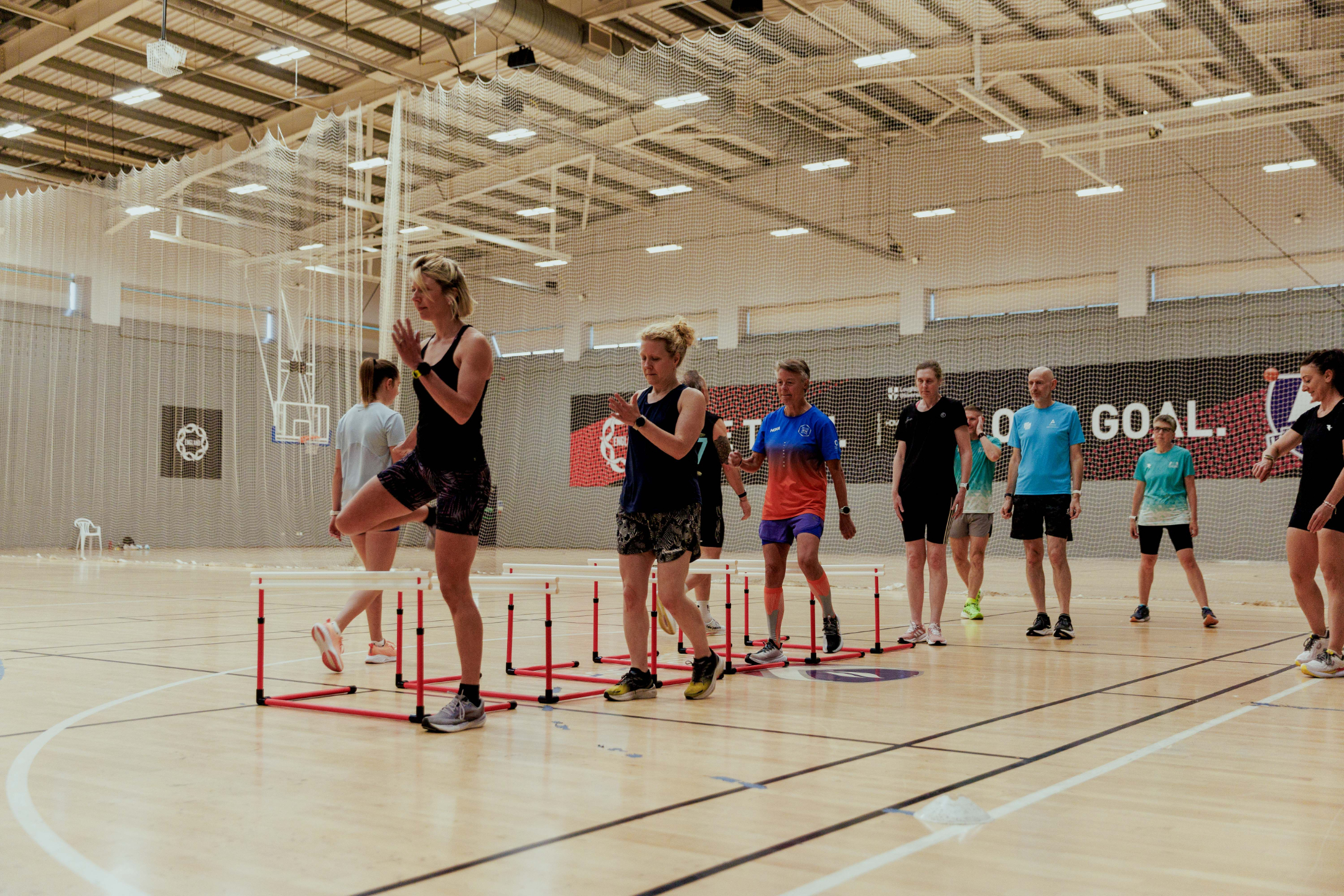
Drills can be micro-dosed into what Jeffreys (2007) referred to as a RAMP warm up – a sequential way of Raising body temperature, Activating and Mobilising the muscles before Potentiating ahead of that training run or 10k race. We spoke above about how the long-term effecting of drills can improve running form and in turn will improve performance but evidence suggests there can be an immediate priming
effect if effected to Activate or Mobilise as part of a dynamic warm up. Drills prime fast twitch fibres and prepare the muscles to fire explosively.
So the warm-up provides you will ample opportunity to micro-dose some drills into your daily routine. Ok, your warm up before the local 10k might be more lengthy and intense than your warm up for a weekly shuffle round park run, the latter of which you may understandable feel doesn’t require too much by way of priming through fast strides effected before you start. But before every single run you really should be doing a handful of activation and mobilisation drills.
The above being said some of you may feel that longer and more stand-alone drills sessions may be beneficial to complement the micro-dosing effected as part of a dynamic warm up. Ok, this requires more of a time commitment which may suit you if for instance you are retired or no longer have child care commitments. The benefit of this is that you are unlikely to rush through the drills you effect warm up style and more likely to perform them biomechanically correctly. Let’s face it doing drills can be mentally and physically tiring so there’s nothing wrong in feeling that one or two stand alone sessions per week are where it should be at in terms of your commitment.
This leaves us with a few key questions for self-reflection:
1. What will I change as a result of a Run Through Coaching Running Technique Workshop?
2. Where are the windows of opportunity for me to make those changes be they in my warm up or a stand alone session?
3. How will I monitor my progress on running technique drills?
4. When do I need to progress my drills and make them more complex and when do I need to regress then perhaps after injury or a period of inactivity?