
SUB 2:
SAWE AND YOU!
IN THE FINAL PIECE, RUN THROUGH COACHES MATT LONG AND SAM GOODCHILD EXPLORE WHAT TRAINING THE SUB 2 HOUR PERFORMANCE OF SABASTIAN SAWE SHOULD MEAN FOR YOU:
One of America’s most prominent ever business philosophers, Jim Rohn, once famously quipped, “If you don’t design your own life plan, chances are you’ll fall into someone else’s plan”. Article 2 in our series was very much centred around the training plan of Sabastian Sawe so for us to leave it there very much risks you falling into the trap of following someone else’s plan.
We very much do want you to be instrumental along with a coach in designing your own running life plan so to speak but this of course does not mean you cannot be guided by the principles which guided Sawe to his recent sub-2 success. This is far from plagiarising the plan of another athlete which is why we suspect you have become a Run Through athlete or at least follower in the first place.
Aerobic Endurance
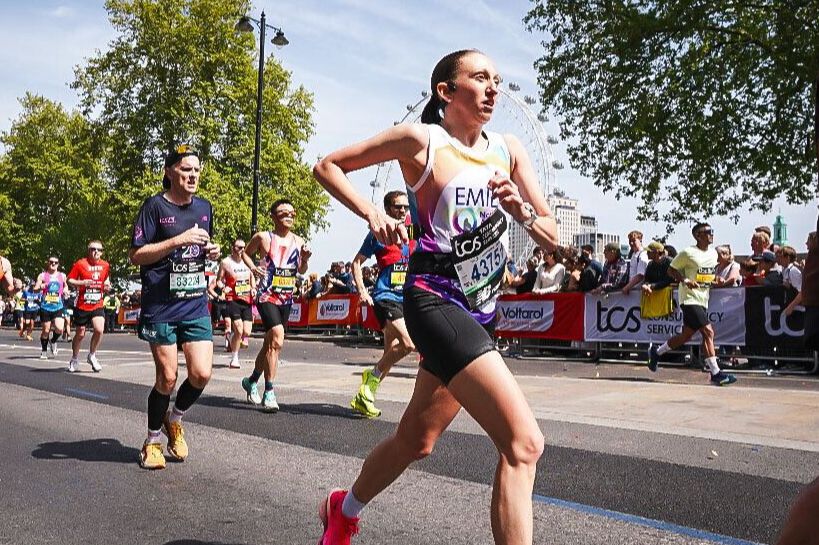
In our second article you may recall that we referred to Sawe as an ‘aerobic animal’ who averaged 125 miles per week with a peak of around 150 miles. The Matt Long once had a friend at University who experimented with jumping up from a 40 mile week to over 100 all in one giant leap! The said athlete reported ‘Feeling great for
the first 10 days or so’, before his team-mates realised he had been absent from a session or two and then ended up visiting him whilst he was worryingly attached to a drip in the local hospital, after things had very quickly gone pear shaped.
So no don’t try 100 miles a week but by all means work to the principle of progressive overload which normally means no more than a 5% increase on your previously block of work. Build in increments, block by block and that doesn’t mean every week and also like Sawe, get those deload weeks in where volume is reduced every 3 to 5 weeks.
The very same principle of progressive overload needs to be applied to the all important long run. OK Sawe went up to 25 miles so should you? Answer is probably not. Why? An ‘easy’ 25 miles for Sawe may well have been around two and a half hours, whereas for you it could be anywhere between 3 and 5 hours. So it really is time on your feet for the long run which may mean that you peak at 20-22 miles rather than 25 miles for that last long run, ordinarily 3 weeks or so before race day.
Remember last time out we spoke about how Sawe would switch his work between gravel and asphalt thus gaining a biokinetic effect from operating on different surfaces? So take a look at your training diary- don’t just look at how far or fast those training runs have been, look at what surfaces you operate on.
Of course as you move towards your target marathon you do need to operate more and more on road in and be faithful to the principle of specificity, but earlier in the training block you may way operate on the trails but be prepared to run to feel rather than split. Recovery runs can for instance always be effected on the more forgiving surface of
grass.
Our last piece pointed to how Sawe would often ‘double day’, running up 12 miles in a morning and around 6 miles in the afternoon. For most of you reading this, ‘double days’ may not be worth it on a ‘risk-reward’ basis because of enhanced injury risk but you may well complement a run with a session on the bike or dedicated Strength & Conditioning
session, for example.
Those of you who are tempted to move towards ‘double days’
should again do this progressively. After consulting your coach you could try one double day per week or training micro-cycle but most certainly don’t jump into doing 3 or 4 double days of running because that is the road to potential disaster as you are simply unlikely to be robust enough for it.
Any masters (35 plus) athletes and given your advanced biological and probably training age, you will inevitably take longer to recover between runs, thus the ‘double-day’ goes against the grain.
Interval Training
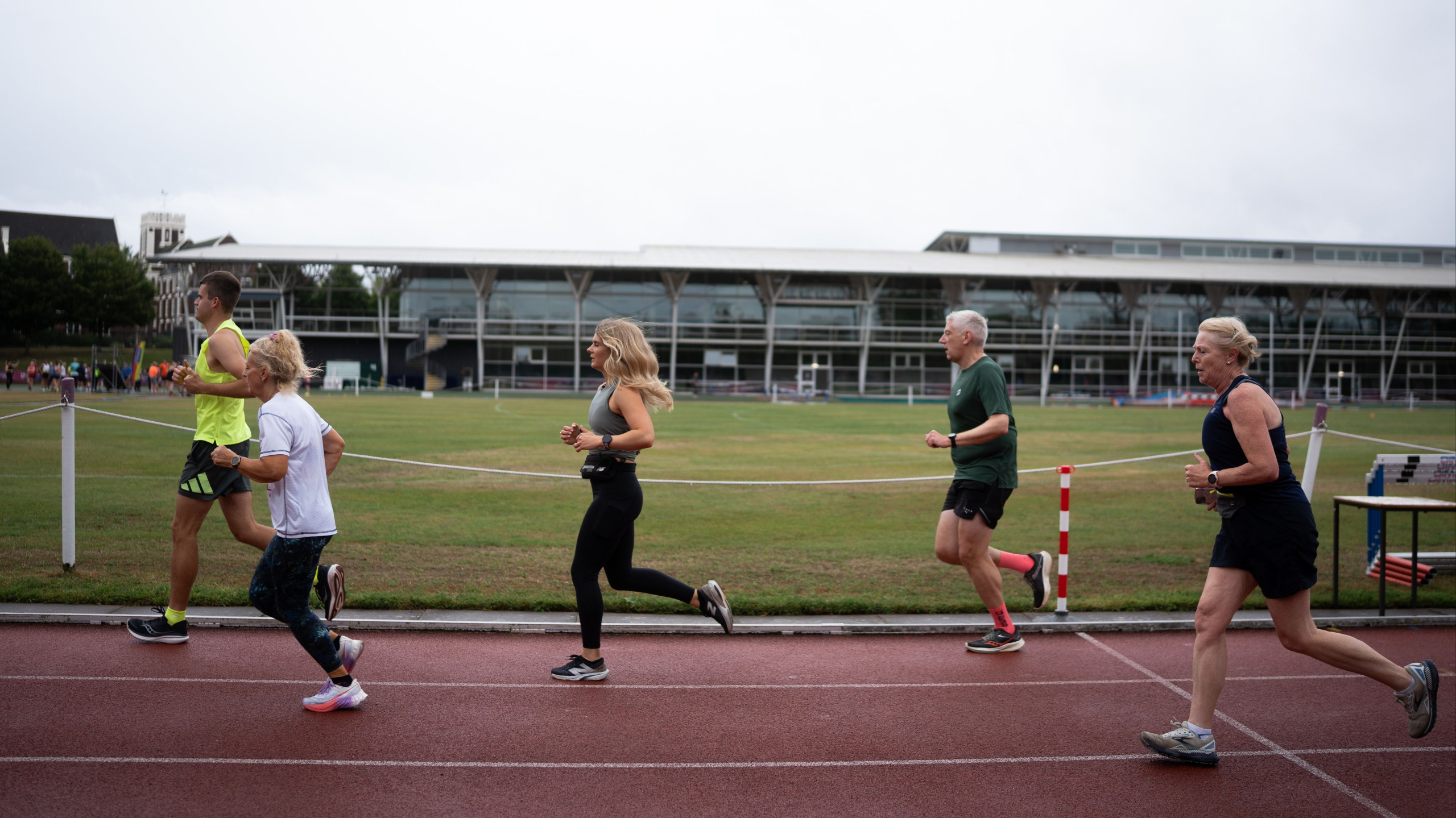
The second piece in this series mentioned how the new world marathon record holder would effect shorter intervals which would tend to involve between 5-10 miles of work broken down into repetitions of between 1km and 2km typically. Like the man
himself you will need to develop ‘speed reserve’ by operating at faster than marathon race pace and critically the training effect takes place due to being able to float the recoveries (slightly faster than a jog) rather than walking them and certainly not standing still.
If you are working on grass or trails as we indicated, you should be above then definitely try and run to feel and time rather than split or set distance. So rather than being preoccupied with covering 1km in an interval, try for example 5 mins of work and so on.
In addition we articulated how Sawe would periodically effect blocked work over distances of more than 2km in order to simulate marathon race pace. These longer aerobic intervals can be performed as a stand alone session but remember they can be periodically built into say every other long run.
We as coaches tend to refer to this as ‘tempo-blocking’. You basically do a long run at an easy pace but periodically put some blocks in at specific paces to ‘spice up’ the run. Remember not to try and do this on every single long run however as it could lead to burnout. This being said, periodically, Tempo-blocking the long run can be considered to be a ‘2 for 1’ session. You get the stimulus of time on your feet and some quality work in there at the same time.

Strength Training
Unlike the reigning London marathon mens champion, you won’t have the benefit of residency in the Rift Valley of Kenya and that means you need to do some dedicated sessions on those inclines. Why? Once again if you are 35 plus, the evidence is overwhelming that hill work is a mode of resistance training which helps to a degree to counteract chronological and biological age-related muscle loss. Don’t just think
about ‘hill sprints’- tale to your coach about diversifying your work into alactic sprints, hill fartleks, Kenyan hills and so on.
If you're looking down the more Strength & Conditioning route, finding a routine focuses on the Quads, Hamstrings, Calves & Core muscles can be a game changer when it comes to holding strong towards the end of your races. Stronger muscles doesn't just mean being faster, it also means being more robust. You're likely to recover quicker off long runs & interval sessions the stronger you are, reducing the risk of injury down the line of course.

Diet
Last time out we mentioned that prior to the race itself, Sawe’s breakfast of bread and honey served as a quick digestive carbohydrate, functional in the replenishment of liver glycogen stores, resulting in an immediate energy boost whilst avoiding a ‘sugar crash’.
We alluded to our very own Gemma Hiller-Moses who along with coach Lewis, often speaks about ‘Training the Gut’ when talking about ingestion. So the key word is ‘habituation’. Practice, practice and practice again in training both in terms of pre-run fuelling and in terms of how you take on both nutrition and hydration during your longer runs.
Yes, follow the sports science but don’t let a fixation on number of carbs, calories and so on make you abandon what coach educators would frame as a ‘guided discovery’ approach. What’s this about? It’s basically trial and error within sensible parameters, as what works for one person won’t be quite right for another athlete.
After reading hopefully all three of our Sub 2 series, we now leave you with eh following questions that we would like to challenge yourselves to think about and answer:
- How can I build aerobic volume in a progressive way?
- Which surfaces am I running on and why?
- When and how might I do more than one session in a day?
- Why is it important that my interval training retains an active rather than passive mode of recovery?
- Where in my training micro-cycle am I habituating marathon feel and split paces?
- What strength endurance training am I undertaking and with what frequency?
- How often am I practicing fuelling during my runs?
- What does my fuelling look like pre and post run?